
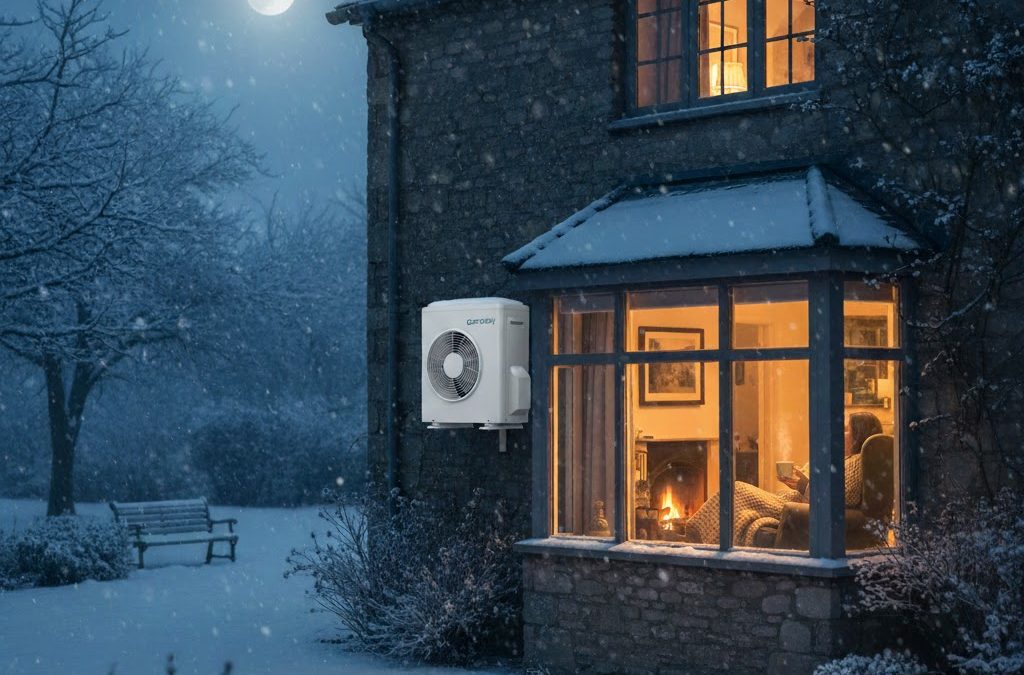
When the temperature drops below freezing, the biggest worry for any homeowner considering a transition to renewable energy is: “Will my heat pump actually keep me warm?”
To answer this once and for all, Octopus Energy recently conducted an extreme experiment. They locked their host, Xander, in a specialized research freezer set to a bone-chilling -20°C (-4°F) for 30 minutes. The goal? To see if the human or the Octopus Cosy 6 Heat Pump would give up first.
The Science of “Science Magic”
One of the biggest myths about heat pumps is that they can’t find heat when it’s cold outside. As TJ, the head of the Octopus heat pump program, explains, it’s not magic—it’s physics.
A heat pump works like an air conditioner in reverse. Even at -20°C, there is still thermal energy in the air. The “Cosy” unit “steals” this heat from the freezing outside air and compresses it to heat your radiators and hot water.
The Stats from the Freeze:
-
External Temp: -20°C
-
Water Output Temp: 45°C (Perfect for home heating) [
04:13 -
Efficiency: Even in these extreme conditions, the unit remained twice as efficient as a traditional gas boiler [
08:18
4 Things We Learned from the -20°C Challenge
1. They Are Built for Extreme Climates
Heat pumps are already the standard in Scandinavia, where sub-zero temperatures are a daily reality. Octopus Energy uses a £10 million R&D facility to test their units in massive freezers and silent rooms to ensure they are both durable and quiet [
2. Control is Simple (Even with Frozen Fingers)
One of the challenges in the video involved setting a heating schedule while shivering. The “Cosy” app allows you to boost your home’s temperature or set a custom schedule with a single button. It’s designed to be “Dark Ages” proof—no complex dials or confusing boiler panels [
3. “Over-the-Air” Updates
Unlike a gas boiler, which starts dating the second it’s installed, the Cosy heat pump is “part of the future.” It receives software updates over the internet to improve performance and add new features over time [
4. Massive Efficiency Savings
Traditional gas boilers are, frankly, inefficient. A heat pump is typically 4 times more efficient than a gas boiler. Even in the worst possible winter conditions, you can expect it to be at least twice as efficient, significantly lowering your carbon footprint [
Debunking the Myths
During a high-stakes trivia round (where the penalty for wrong answers was eating frozen sour candy), the video cleared up several common misconceptions:
-
Emissions: Heat pumps release zero emissions at the point of operation [
06:01 -
Installation Time: A typical “Cosy” installation takes only 3 to 4 days [
06:15 -
Radiators: You don’t always need to replace them! It depends on your current setup, but Octopus offers “Turbo” or “Eco” install options to fit your existing home [
09:00
Ready to Make the Switch?
The results of the experiment were clear: Xander barely survived the 30 minutes, ending with “burning” frozen fingertips and a frosted-over mustache. Meanwhile, the Octopus Cosy Heat Pump didn’t break a sweat, consistently pumping out 45°C heat without a single glitch [
With over 100,000 people already registered for an Octopus heat pump, the shift to green energy is happening fast.
Ready to start your journey? Use my referral link below to sign up with Octopus Energy and join the future of home heating.
👉
Disclaimer: This article is based on the Octopus Energy demonstration video. Always consult with a professional installer to see if a heat pump is right for your specific property.