
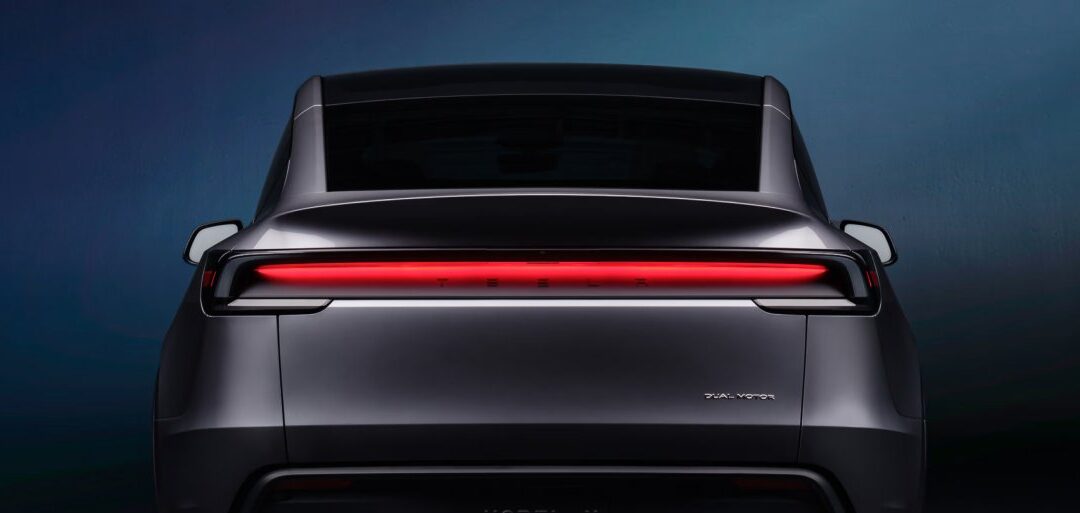
The anticipation of taking delivery of a brand-new Tesla often buzzes with a unique energy, a stark contrast to the sometimes protracted and negotiation-heavy experience at traditional dealerships. The streamlined efficiency that Tesla champions, focusing on digital interfaces and a direct-to-consumer model, undoubtedly appeals to many. However, for those venturing into the world of electric vehicles for the first time, or even those new to the intricacies of a Tesla, this very efficiency can sometimes feel less like a convenience and more like an overwhelming hurdle.

The Technological Symphony Beneath the Surface: Tesla’s Next-Gen Vehicle Networking
While the delivery experience focuses on the human interaction of receiving a new vehicle, the underlying technology powering that vehicle is equally fascinating. In a separate but equally significant development, Tesla is actively revolutionizing the very nervous system of its vehicles by moving beyond the decades-old CAN (Controller Area Network) bus system.
For decades, CAN has been the industry standard for in-vehicle communication, allowing various electronic components to talk to each other. Developed by Bosch in the 1980s, it drastically simplified wiring compared to earlier point-to-point methods. However, in today’s data-rich automotive landscape, with massive amounts of sensor data from advanced driver-assistance systems, high-resolution infotainment screens, over-the-air updates, and centralized Electronic Control Units (ECUs), the limitations of CAN are becoming increasingly apparent.
Tesla is pioneering a next-generation vehicle network designed to overcome these limitations. This new network is likely to work in tandem with the move towards a 48-volt low-voltage architecture, first seen in the Cybertruck.
CAN Bus: The Aging Maestro
The CAN bus system, standardized as ISO 11898 in 1993, was a revolutionary technology in its time. It reduced wiring complexity and facilitated communication between various electronic control units within a vehicle. CAN operates on a message-based protocol where nodes broadcast data with identifiers, and message priority dictates access.
However, the data-carrying capacity of even the more modern CAN FD (Flexible Data-Rate) is proving to be a bottleneck. CAN 2.0 is limited to a mere 1 Mbps, while CAN FD offers a theoretical maximum of around 8 Mbps. This bandwidth is barely sufficient for uncompressed high-definition video streams, severely restricting its ability to handle the massive data flow in modern, sensor-laden vehicles like Teslas.
Furthermore, while simpler than point-to-point wiring, the multiple CAN buses and gateways in a modern vehicle result in a complex, heavy, and often difficult-to-diagnose wiring harness.
Tesla’s Vision for the Future of In-Car Communication
Tesla’s next-generation networking approach centers around the concept of time-sensitive communication. Unlike CAN, where simultaneous messages can collide and fail to reach their destination, Tesla’s TDMA (Time Division Multiple Access) system assigns specific time slots to each node. This ensures guaranteed access and eliminates the possibility of data collisions.
Imagine CAN as a crowded room where everyone is trying to speak at once, while TDMA is like a meticulously scheduled series of individual meetings.
According to Tesla’s patent applications, this TDMA-based network operates in repeating cycles. At the beginning of each cycle, a Network Allocation Map (MAP) is broadcast, acting as a dynamic schedule for that specific cycle. This MAP dictates which node can transmit, the recipient node, the duration of the time slot, and crucially, the type of traffic being transmitted.
This allows for sophisticated Quality of Service (QoS) management, categorizing data based on its priority. The patent highlights two main traffic types:
-
Low Latency (LL) Traffic: This is reserved for critical, time-sensitive signals such as sensor readings for Full Self-Driving (FSD), airbag deployment triggers, and control commands. These signals are allocated short time slots that repeat very frequently (potentially every 500 microseconds), ensuring delivery within strict time constraints. The data packets themselves are kept small to fit within these rapid slots.
-
Bulk Traffic: This category is for data where overall volume is more important than millisecond-level delays, such as infotainment data, camera video feeds, and larger data logs. These transmissions are assigned longer time slots, allowing for larger data packets and higher overall throughput, even if the transmission frequency is lower than LL traffic.
This entire system relies on precise synchronization across all network nodes, achieved through synchronization signals within the TDMA cycle and specialized modem hardware. The network can also be logically divided into domains (e.g., front-left, cabin-right), each managed by a Domain Master node responsible for the MAP and communication within its zone.
In essence, Tesla’s next-gen networking isn’t just about sorting data; it’s a highly managed system implementing traffic prioritization, dynamic slot allocation, and potentially centralized domain management, all geared towards enhanced efficiency and reliability.
Synergy with 48-Volt Architecture and LVCS
Many of the concepts within Tesla’s new networking approach appear designed to complement the company’s recently introduced LVCS (Low Voltage Connector Standard). LVCS dramatically simplifies vehicle wiring by reducing the number of connector types from over 200 to just six. While the networking patent focuses on the data protocol, LVCS streamlines the physical layer. Furthermore, the 48-volt architecture underpinning LVCS potentially allows for the vehicle’s DC power lines to be used as a network medium (Power Line Communication or PLC), further reducing wiring complexity.
Tesla has already implemented these new approaches in the Cybertruck, as evidenced by its innovative interactive wiring diagram designed to aid technicians in diagnosing wiring issues. We can anticipate even more features leveraging these advanced capabilities in future Tesla vehicles.
The move to a 48-volt system also enables the use of thinner wires, leading to reduced costs. LVCS simplifies connectors on both the wiring harness and individual components, resulting in fewer unique parts, a more streamlined manufacturing and supply chain, and improved vehicle repairability.
The Invisible Revolution
While seemingly a mundane topic, Tesla’s advancements in vehicle networking represent a fundamental shift in how vehicles communicate internally. This “skeleton” will underpin the functionality of future Tesla systems, leading to:
- Smoother and faster data transfer for FSD: Enabling quicker and more effective decision-making by the autonomous driving system.
- A more responsive and feature-rich infotainment system: Capable of handling increasing data demands.
- Enhanced support for deep over-the-air updates: Facilitated by reduced internal complexity and the limitations of the older CAN bus system.
This technological leap, while invisible to the average user, underscores the significant engineering innovation that goes into every Tesla vehicle.
Thinking about joining the Tesla family? Don’t forget to use a referral link when placing your order! Here’s mine:
The Powerhouse Within: Insights into Tesla’s 4680 Battery Cell Program
Another crucial aspect of Tesla’s technological advancement lies in its ambitious 4680 battery cell program, a cornerstone of its vehicle roadmap, particularly for the Cybertruck. Bonnue Eggleston, Tesla’s Senior Director for the 4680 cell project, recently shared valuable insights into the development, manufacturing challenges, and future direction of this groundbreaking battery technology in an interview with Sandy Munro.
The 4680 cell, named for its dimensions (46mm diameter by 80mm long), represents a significant step forward in battery technology. Tesla is currently producing the second generation of this cell, internally known as the Cybercell, which is integrated into all variants of the Cybertruck. This Gen 2 variant marks a considerable improvement over the initial Gen 1 cells, whose limited production was halted following charging issues with the 4680 Model Y.
From Prototype to Production: A Herculean Task
Scaling the 4680 cell from a conceptual design to mass production has been a formidable challenge. However, according to Tesla, the 4680 has now become its most cost-effective cell per kilowatt-hour (kWh). Eggleston emphasized the immense effort and meticulous attention to detail required to achieve this scale.
Leveraging a diverse team of experts, Tesla tackled the complexities of bringing the 4680 to life, from the initial processing of raw electrode materials to the critical cell formation process.
Breaking New Ground in Battery Manufacturing
To overcome the hurdles of mass production, Eggleston’s team embraced innovation, pioneering new processes previously unseen in the battery manufacturing world. The groundbreaking dry electrode process is a key example, eliminating the need for toxic solvents and large ovens used in traditional battery production. This not only reduces the factory’s physical footprint but also creates a cleaner and safer manufacturing environment, resulting in a better-quality cell from the ground up.
Complementing this, Tesla has also developed a custom electrolyte formulation in-house, specifically tailored to its anode, cathode, and separator materials, further solidifying its deep vertical integration strategy.
This vertical integration extends to the in-house production of components like cell cans, optimizing the manufacturing process and minimizing waste. Eggleston also highlighted the unique terminal design of the 4680 cell, which facilitates easier and more reliable welding, contributing to Tesla’s ambitious production targets.
A Focus on Sustainability
Sustainability is also a key consideration in Tesla’s 4680 program. The company is actively working on recovering and recycling materials directly from the manufacturing line to minimize waste. Eggleston emphasized this commitment as part of Tesla’s broader sustainability efforts, aligning with the environmental benefits of the solvent-free dry electrode process.
The Structural Advantage: Integrating Batteries into the Vehicle
While the 4680 cell is currently synonymous with the Cybertruck, it’s expected that Tesla will eventually expand its use to future vehicles, either in its current format or through the application of the technologies learned during its development. Eggleston noted the crucial collaboration between his team and the vehicle engineering team in achieving the Cybertruck’s efficiency. The structural battery pack design minimizes weight while providing additional structural support and protection to the vehicle’s cabin and occupants.
The Future of the 4680 and Beyond
Eggleston expressed significant confidence in the progress and future of Tesla’s 4680 program, citing substantial improvements in production throughput, yields, and product quality since he assumed leadership. He acknowledged the ambitious goals set by Tesla and Elon Musk, noting the use of metrics like headcount per gigawatt-hour to drive production efficiency. This metric essentially measures labor efficiency, indicating a more streamlined and cost-effective manufacturing process when higher battery capacity is produced with fewer people.
While Eggleston hinted at future developments, and there have been reports of Tesla working on even more advanced cell technologies, the global battery technology race is rapidly evolving. While Tesla has been focused on scaling 4680 production and deploying increasingly powerful Superchargers (currently up to 325kW, with 500kW on the horizon), it faces growing competition.
For example, Chinese automaker Zeekr has demonstrated new LFP (Lithium Iron Phosphate) batteries capable of charging from 10% to 80% in under 10 minutes, with sustained charging speeds exceeding 400kW. Currently, the Cybertruck’s charging curve, while impressive, can only sustain its peak charging speed for a short period, resulting in a potentially less optimal charging experience compared to some upcoming competitors.
Tesla will need to continue focusing on developing and producing new battery cells that maintain the cost advantages of the 4680 while also achieving faster charging speeds across its entire vehicle lineup. For now, these ultra-fast charging capabilities are primarily limited to the Cybertruck, but with upcoming refreshes for the Model S and Model X, it’s anticipated that Tesla’s flagship vehicles will be among the first to fully leverage this advanced charging technology before it trickles down to the rest of the fleet.
Ready to experience the cutting-edge technology of a Tesla? Don’t forget to use a referral link to potentially earn rewards! Here’s my referral page: